
Commercial Locksmith
From a storefront off Foothill Boulevard to a suite near Haven Avenue, the first step is figuring out which door needs attention and who can authorize work. LockReach helps Rancho Cucamonga business owners and managers plan a visit around access, staff and customer traffic.
909-545-6802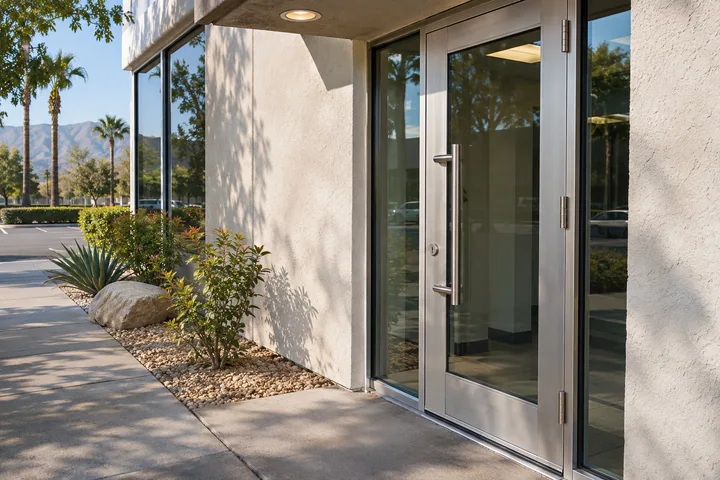
Identify the door people actually use
A business address often leads to the front while the problem is at a staff door, delivery entrance or shared lobby. Tell us which entrance is affected and the closest cross street, unit marker or loading area. If the building directory uses a different name from your business, include that detail. Ask where a service vehicle can park without blocking an accessible path, customers or deliveries.
Include a description of the hardware and what changed. A glass storefront with an aluminum frame often uses a different lock setup from a solid suite door. Is the key hard to insert, is it turning without locking, or does the door bounce back instead of closing? That last symptom may have as much to do with the closer, latch or frame as with the cylinder.
Plan for staff changes and tenant turnover
Decide who's supposed to have access once the work is done. List the doors used by the tenant, cleaners, opening staff, after-hours workers and the owner or manager. Before a staff change, separate keys the business controls from keys for building common areas. Check with the property manager before authorizing a change to any shared hardware.
If the lock itself is sound, rekeying may suit the doors where access needs to change. Groups of doors can use the same key only if the hardware and the access plan support that setup. It's worth recording who receives each new key, so the next time someone leaves there is a clear starting point.
Describe powered hardware and exit doors early
Tell us if the door uses a keypad, card reader, electric strike, magnetic lock or alarm contact. Explain what happens during a normal unlock and what still works today. An authorization issue or a power problem can look like a failed lock from outside. We can discuss which locksmith work is in scope and whether the building's access-control provider should join the conversation.
Occupied buildings have to remain safe to exit. Let the property's responsible person know before work affects an exit or an alarmed door. If traffic has to be redirected during an appointment, coordinate that through management. Never ask staff to improvise a workaround on an exit while the underlying issue is still being assessed.
Schedule work at a useful moment
An issue on a front door during business hours may need a temporary plan for customers. If the entrance is usable, work can sometimes be planned for a quieter window so there is room to inspect it and test it. If the door cannot secure the premises, say so explicitly and ask about current availability. Have someone who can approve changes reachable during the visit.
For a tenant turnover, coordinate with the people who are leaving and the people who are taking possession. Decide which keys should change and when, and arrange how the first set of authorized users will get in. For an office or warehouse that stays occupied, tell the locksmith where work can happen without disrupting check-in or scheduled deliveries.
Make the estimate and handover clear
When comparing estimates, check whether the business is paying for entry, repair, changes to access, replacement hardware, or a combination. Ask if parts and travel are included and what happens if damage is found after the hardware is assessed. An estimate should identify the affected doors clearly enough that an on-site employee can check it against what was requested.
At handover, test the actual opening and closing cycle with the person responsible for the door. Confirm that authorized staff can enter, the latch engages reliably and normal exit works. If a door still rubs, binds or misses the frame, bring that up before closing out the work. Write down any items that were referred to building maintenance or another provider.
Leave instructions for the next shift
Ask the person who normally opens or closes to test the door with you when possible. They can show whether it behaves the same way it did before the issue started. Record the specific entrance and any staff keys or credentials that changed, and let the next shift know who to contact with questions. If only one door was rekeyed, name that door explicitly. This prevents a working key from being mistaken for the replacement to every opening.
If the locksmith identified a closer, alignment or access-control problem outside the requested work, pass a short description to the person responsible for it. Include what happens during normal use and when staff first noticed it. Agree on a follow-up point instead of leaving different people to make independent changes. If a side door or staffed entrance was used temporarily, verify the usual door works and communicate when normal access resumes. Where the building has its own security desk, let them know which ordinary access procedure they should expect at the next opening or closing.
A quote for multiple entries works best when it identifies each door in everyday terms. Use names staff will recognize, such as the west receiving door or the suite entrance facing Haven. If two doors have similar hardware, still make a separate note for each. Record the business consequence as well as the symptom. A door that is awkward when unloaded has a different schedule from one used continuously for deliveries. Let the locksmith know if the two jobs can proceed independently or staff need one opening to remain in service at all times.
Frequently asked questions
Should I replace every lock after a tenant leaves?
Start with a list of affected doors and people who still need access. Serviceable compatible locks may be candidates for rekeying. Get the owner's permission for common areas.
Can you work on a card reader system?
Call with the system type, what the door does and who manages the controls. We can discuss what locksmith work applies and whether a separate system provider is needed.
Which information helps when a storefront lock fails?
Give the suite, exact entrance, outside and inside hardware description, and whether the door still locks. Name an authorized contact and check current availability.
Can I plan work before opening or after closing?
Describe the access window and whether the building has any alarm, security or building-management requirements. Ask for an appointment that fits that window.
Talk through your locksmith request
Have the address and the type of door or vehicle ready.